
As African American people in the United States, we shape the narrative around
Juneteenth and what it means. Juneteenth is about more than good food, parades and
good times. It’s a day that reminds us of who we are, what we’ve survived and what we
should continue to build for ourselves and future generations.
Another poignant reminder of the trauma the multinational system of chattel slavery
caused our ancestors, happened in New York City a few months ago.
The United Nations General Assembly, in March, voted to declare the enslavement of
Africans during the transatlantic slave trade as “the gravest crime against humanity.”
The vote was a reminder of the centuries of atrocities our ancestors survived.
The resolution passed with 123 countries voting “yes,” while 52 countries abstained —
including most European nations, Australia and Japan. Only three countries voted
against the resolution: Israel, Argentina and the United States. The “no” vote by those
countries, especially the U.S., is like a slap in the face for many African Americans and
other descendants of enslaved Africans.
Juneteenth is a day for us to pause and reflect on this grave crime, the obstacles our
ancestors overcame and the plans we should be making to ensure our future happiness
and survival. In other words — Juneteenth is not just a holiday — it’s a consistent call for us to
organize and take action.
Let’s review the history of Juneteenth: Although the Emancipation Proclamation was
signed on January 1, 1863, more than two years after that (June 19, 1885, to be exact),
over 250,000 Black people in Texas remained enslaved. Why? Because Texas was
isolated, and slaveholders intentionally withheld the news.
Many had already heard, by word of mouth, that Abraham Lincoln signed the executive
order making them free. But that knowledge didn’t mean they could act on the information. Their freedom was delayed because they had no power. Leaving a plantation could mean being beaten or
killed. Slaveholders and powerful people and systems were still in control. They used violence
and fear tactics to keep Black people subservient.
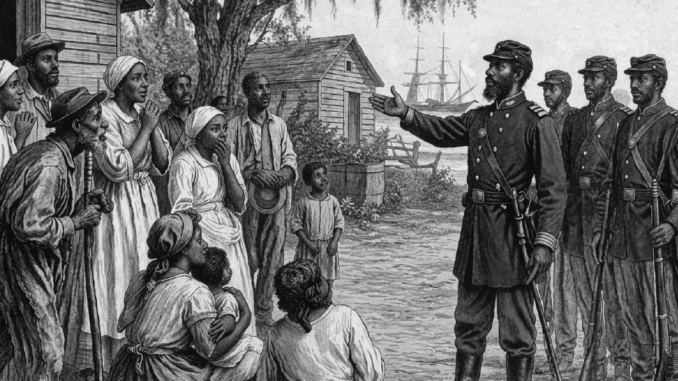
When Union General Gordon Granger arrived in Galveston, Texas, on June 19, 1865,
and issued the president’s General Order No. 3, they didn’t just announce freedom —
they delivered an official message with force and power behind it.
Records from the Freedman’s Bureau from 1865–1868, and the Federal Writers’ Project
from the 1930s reveal that while some of the freed people joyously celebrated or held
prayer services when they heard the news, others immediately looked for family
members that were sold away and searched for safer territory.
But some were in disbelief and feared retaliation from slave owners.
In fact, many faced violence from former masters who prevented them from leaving,
according to a June 2025 article by history professor B.L. Wilson in “GW Today,” a
George Washington University digital publication.
Nonetheless, many of the freed people were motivated to act by the executive order.
They planned for a better life for themselves, their children and their descendants. They
had hope for the future.
That’s why Juneteenth deserves our full attention and recognition.
When we celebrate Juneteenth every year, we should follow in the footsteps of our
ancestors. Let’s rejoice, pray, organize, plan and fight for more control. Let’s remember
what our ancestors did when they were free. They fought for a better future for their
children, grandchildren and their future descendants — us.