
by Kallan Louis
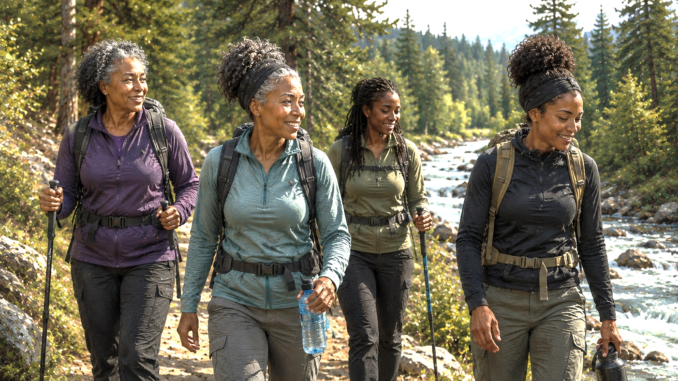
Hiking is the most popular outdoor activity in America with more than 63 million people participating last year, according to the Outdoor Industry Association’s 2026 Outdoor Participation Trends Report. Despite its popularity, Black people have been underrepresented and often stereotyped as not interested in hiking or the outdoors in general.
When Malika White hikes on a nature trail, it’s therapy. As the founder of Black Girls Do Hike, she’s a hiking enthusiast hoping to change narratives about Black people in nature. She didn’t anticipate its critical impact on her mental health during challenging times.
“It’s always this sigh at the end of the hike,” said White. “It’s a moment of silence where nobody wants to talk, because we’ve been walking for a while. At the end, it’s like, ‘We did it!’ That’s the moment that I want them to experience.”
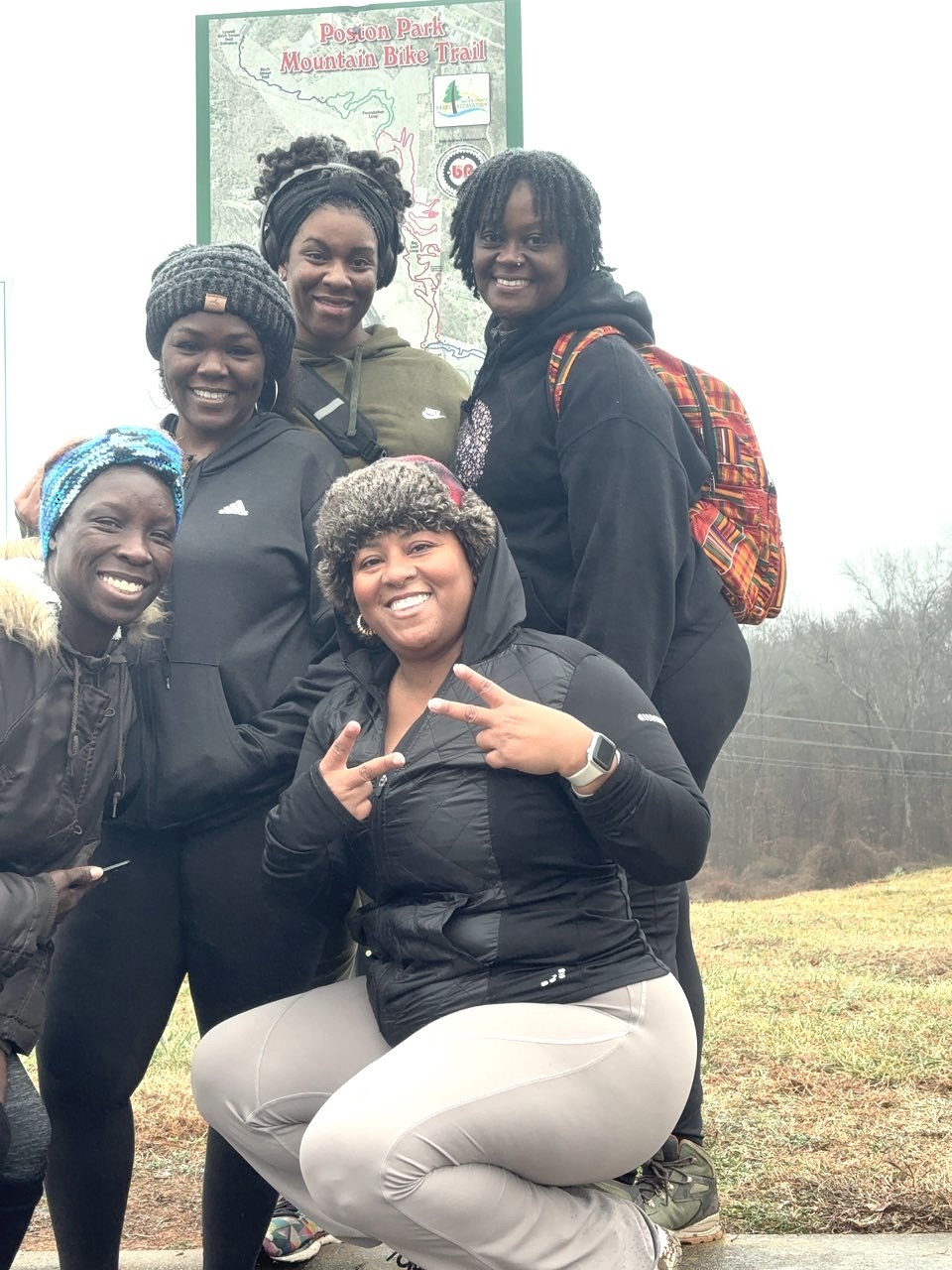
In 2018, White initially began hiking to exercise. She had some Black female coworkers lace up their shoes and join her. The camaraderie led her to developing a meetup group specifically for Black women. In this environment, the women could openly discuss topics important to them outside of the office while maintaining a healthy lifestyle.
In 2020, White lost her job. Feelings of isolation and uncertainty consumed her. The covid pandemic exacerbated her situation as her relationships with her former coworkers dissolved and her financial situation grew worrisome. The hiking meetups stopped.
This was not the first time White faced a traumatic life situation. In 2009, she moved to Charlotte from Charleston, South Carolina, to escape a bad relationship and rebuild her life. She and her two kids arrived with basically nothing. They navigated several challenges, including a period of homelessness. This time she was more mentally prepared to deal with her predicament.
“I went through a lot in the process of moving,” White said. “It was a struggle. I built myself just to lose it again. I dealt with anxiety and depression, so I knew that I did not want to break mentally. I refused to break.”
White hiked by herself to escape the confines of her home. It was cathartic. She breathed fresh air and scents surrounding her. She felt the sun and breeze on her skin. She appreciated the trees, plants and flowers. This eco-therapy provided her with the physical and mental workout she needed to keep pushing.
“Instead of looking at it like my life is over because I don’t know how to pay my water or light bill right now, I learned to see what this moment is doing for me, “she recalled.
Now energized, she relaunched her hiking group and now operates it as a nonprofit. Her private Facebook group has nearly 2,000 members and averages more than 100 participants at the hikes annually.
“What stands out the most about my hikes is how few people know each other prior,” she said. “By the end of the hike, everybody has become best friends as if we’ve known each other forever.”
White facilitates a program during the hikes–asking reflective prompts along the route. Ahead of the meetups, she scouts locations for the group to stop and journal or mediate and take in their surroundings. This inspired her to develop a guided hiking journal entitled, “Rooted & Rising: A Guided Hiking Journal for Black Women.” The journal includes a tracker, mindfulness exercises and prompts.
The majority of hikes take place locally at places like Crowders Mountain and Reedy Creek Nature Preserve, but the group has hiked outside city limits. A few traveled to other parts of North Carolina and Tennessee to experience some new trails together.
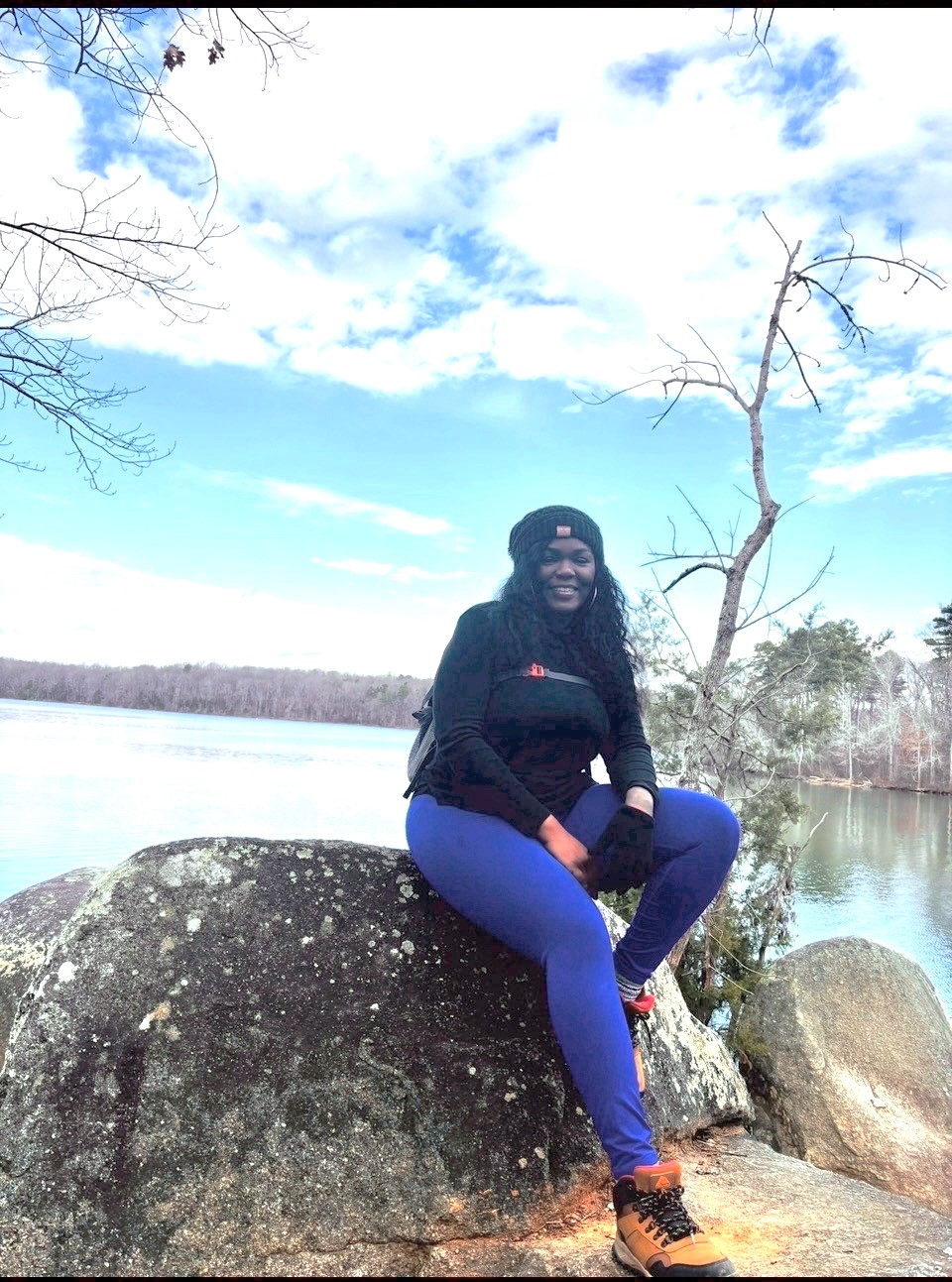
As the group continues to grow, White, who still operates Black Girls Do Hike by herself, is looking for more support to keep this movement going locally through volunteers and sponsors.
She’s wearing multiple hats and taking on new projects including wrapping her memoir entitled “The Space Between Falling and Rising: A Journey of Loss, Healing, and Becoming.” It’s slated to be released this year.
“After losing a 15-year career, I heard a voice that simply said, ‘Go write.’ Years later I found those pages and was in complete shock by what was on them. The same healing journey that led me to write this book is also what gave birth to Black Girls Do Hike.”