
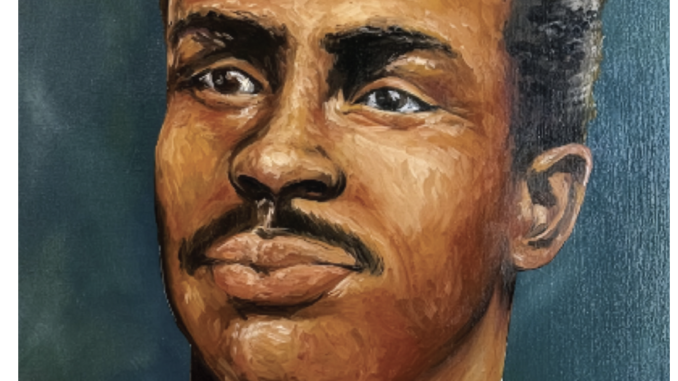
Charlotte Pioneer: John T. Schenck featured in Charlotte History Museum
By Kurtavia Burton
The city of Charlotte is rich in history from past and present contributors. To better understand some of that history, I spoke with Starkey Jones, great-great-grandson of John Thomas Schenck, Charlotte’s first black policeman, to discuss what he called Charlotte’s original blueprint. Speaking with Mr. Jones added to our city’s collective story and preserves the legacy of a man whose life is woven into the fabric of Charlotte’s history.
John T. Schenck was born in 1823 in Lawndale, North Carolina, about 50 minutes from Charlotte. Biracial and the oldest sibling, Schenck grew up on a plantation. His father was a slave master— his mother, a slave. According to Mr. Jones, Schenck’s abilities were evident from a young age. Alongside his father and great-grandfather, he helped build the first mill in Lincolnton, North Carolina, building skills that would follow him throughout his life. “He was skilled and could build anything,” said Starkey Jones.
Recognized for his abilities and his own driven nature, Schenck built a reputation and eventually owned a saloon. He was known for creating opportunities wherever he could, consistently overcoming adversity. Yet, his life was not without hardship.
Schenck successfully overcame a life as the child of a slave owner and an enslaved person and survived life as a soldier in the Union army during the Civil War. After being involved in a train accident, Schenck’s arm was amputated. “Resiliency was a defining characteristic of my great-great-grandfather’s life,” Jones said.
He was elected alderman and served four terms. In 1868, then-governor of North Carolina William Woods Holden appointed Schenck to be the first African American police officer in Charlotte.
John T. Schenck, his brother A. Burt Schenck and others were founding leaders of Paul Drayton Lodge#7 of the Prince Hall Freemasonry organization. During a pivotal period, the lodge notably helped foster and empower African Americans, creating opportunities for leadership, community advancement and support. The founding of Paul Drayton Lodge #7 had a pivotal impact on the Brooklyn neighborhood in Charlotte.
“This is a man, my great-great-grandfather, who worked hard and was very skillful,” said Mr. Jones. John T. Schenck became a pioneer for Charlotte and a symbol of what was possible during a changing time.
Today, Schenck’s portrait is displayed at the Charlotte Museum of History. Created by artist Kalin Davone, the portrait is featured in the Path of Portraits exhibit. According to Nolan Dahm, exhibits manager and historian, Schenck was one of the first portraits included in the exhibit, which honors prominent African Americans who have made history in Charlotte. The portrait was displayed alongside four local artists’ portraits featured for the African American Festival in Charlotte in 2021.
Today, the Charlotte Museum of History includes 15 portraits in its gallery, and the exhibit continues to grow. Visit The Charlotte Museum of History, 3500 Shamrock Drive, Tuesday through Saturday, 11 a.m. – 5 p.m., to view the portrait.
“It feels good to share about his life and how he helped shape the city,” Jones said.