

By Brenda Porter-Rockwell
Advocating for individuals living with autism spectrum disorder (ASD) was not a path La Becky Roe — now the Founder and Executive Director of Charlotte-based Let’s Talk About It…The Autism Center, Inc. — set out to do. It was, she believes, a calling by God placed on her life long before she understood what the work would require.
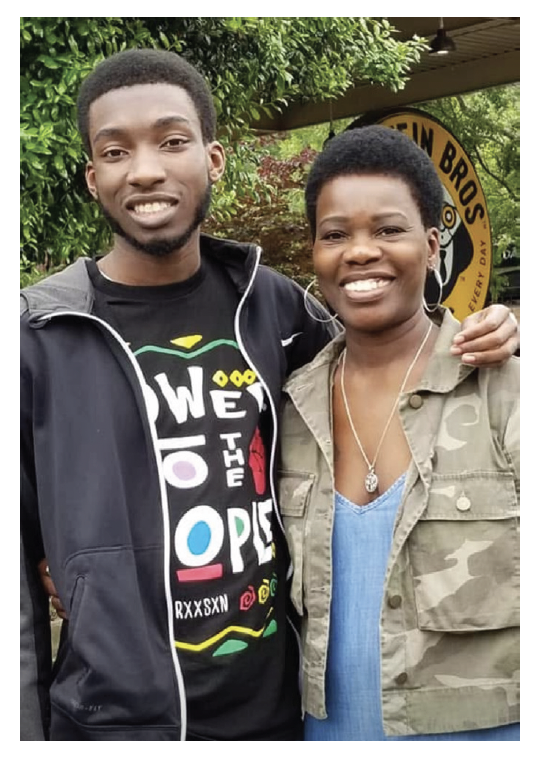
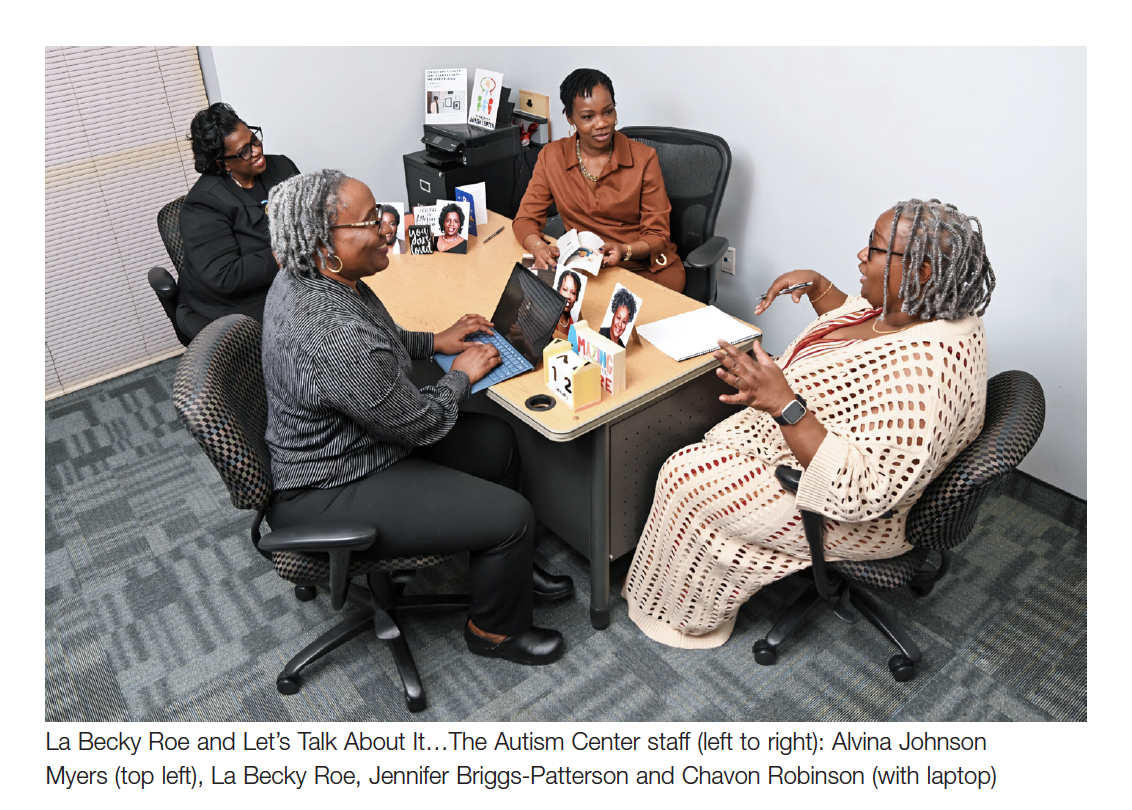
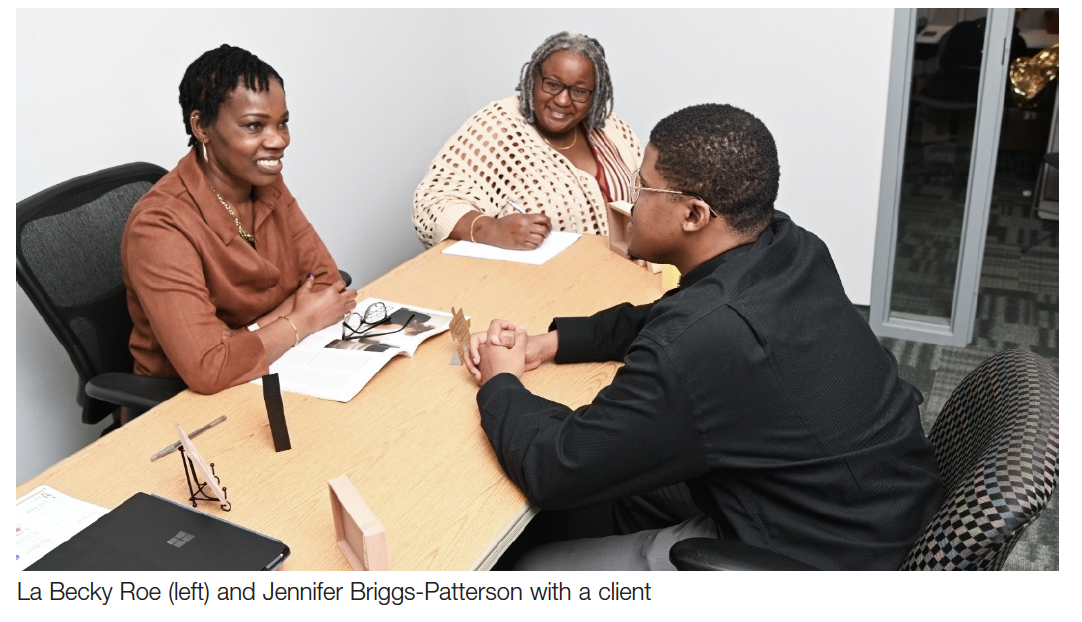
“When I was 13, God told me I was going to have a child with special needs,” Roe said. “He didn’t tell me what kind of special need — just that I would.”
Decades later, that early moment of divine clarity took on profound meaning.
In 1995, Roe gave birth to her son Chris. At age three, Chris was diagnosed with autism. In 1998, doctors delivered a prognosis that shook her to her core: Her son, who was nonverbal at the time, would never mature like his peers and would never even know if she left the room.
“Those words weren’t just devastating,” Roe said. “They were dismissive, uninformed and deeply disrespectful of my son’s humanity and potential.”
What doctors failed to see, she said, were the ways her Chris was already communicating with the world. He could read, solve puzzles, sing on pitch, grasp math concepts, follow directions, and show joy and curiosity.
Devastated — but not defeated — Roe leaned into her faith and her family. Together with her then-husband and extended family, she decided they would not allow the doctor’s limited expectations to define their son’s future.
She prayed: “Lord, help me, order my steps. Show me what I need to do for my son. And today, when I talk to families, I tell them — use your tribe.”
A life shaped by advocacy
Long before autism entered her life, Roe was a natural advocate. As a teenager, she worked to build healthy friendships and mediate conflicts. Born in Lugoff, South Carolina, and raised in New York City, Roe said she learned early how to navigate diversity, challenge and opportunity.
Those skills followed her into adulthood and onto the streets of New York, where she served as a New York City police officer.
“My years in law enforcement exposed me to crises, inequity and what happens when systems fail people with complex needs,” Roe said. “That understanding became deeply personal when my son was diagnosed.”
After retiring from the N.Y.P.D., Roe relocated to Charlotte with her family and returned to school. She earned a degree in business administration and later pursued degrees in criminal justice and human services with a concentration in applied behavioral analysis and crime prevention. Roe eventually completed a graduate certificate in autism spectrum disorder.
“As a Black woman, I knew lived experience wasn’t enough,” she said. “I needed credentials, too.”
Turning purpose into action
In 2018, more than a decade after her Chris’ diagnosis, Roe founded Let’s Talk About It, a nonprofit dedicated to advocacy, education and inclusion for individuals on the autism spectrum.
The organization was born out of Roe’s lived experience and a hard truth: too many families — especially families of color — were navigating autism alone. “Awareness without action doesn’t change outcomes,” Roe said.
Let’s Talk About It works to empower individuals with autism across the lifespan while equipping caregivers, educators, employers, faith communities and service providers with practical tools to offer meaningful support.
“Our goal has always been to fill the gaps — education, advocacy, social skills and systems navigation — where families too often fall through the cracks,” Roe said.
In 2023, Roe shared her journey with ASD in her book, “Spectrum of a Journey,” chronicling the realities of raising a child with autism and challenging the narratives that limit families’ access to care and resources.
Proof beyond predictions
Today, Chris stands as living proof that predictions do not determine destiny. He sang in his high school choir, graduated college, entered the workforce, and now, at 30 years old, is studying computer coding.
“None of this happened by accident,” Roe said. “It happened because someone believed in him when it mattered most. And because faith, hope, persistence, and love proved more powerful than prediction.”
The work of Let’s Talk About It has never been more urgent. According to the Centers for Disease Control and Prevention, about 1 in 31 children in the U.S. has been identified with ASD, making community-based resources essential.
Keeping the conversation going
Roe believes the first step toward inclusion is understanding that autism is not a deficit —but a difference.
“Autism is a different ability, not a different disability,” she said.
Families are encouraged to engage with Let’s Talk About It through workshops, support groups, community events, and educational programming. The organization also partners with schools, agencies, faith communities, and workplaces to provide autism-focused training and consultation.
Support can take many forms — volunteering, financial investment, or simply creating room for autistic voices to be heard.
“Every form of support strengthens an ecosystem of care,” Roe said. “That’s reflected in the trust of partners like United Way, which has funded our work for three consecutive years.”
For Roe, the mission remains deeply personal — and deeply spiritual.
“This is bigger than me,” she said. “It’s about making sure no family feels invisible, unheard, or alone.”