
By Meeka Clark
Michelle “Ms. Bunny” Gregory is a Charlotte native whose roots run deep along the Beatties Ford Road corridor, a historically Black community that helped shape her identity as an artist, mentor, environmentalist, and cultural steward.
She was a fashion design major at the Art Institute of Fort Lauderdale, and she’s a graduate of West Charlotte High School, Gregory’s creative foundation was built early — the spirit, pride and resilience of her Charlotte upbringing still echo through the halls of her alma mater, where her mural continues to shine as a reflection of what the community nurtures and sends forward.
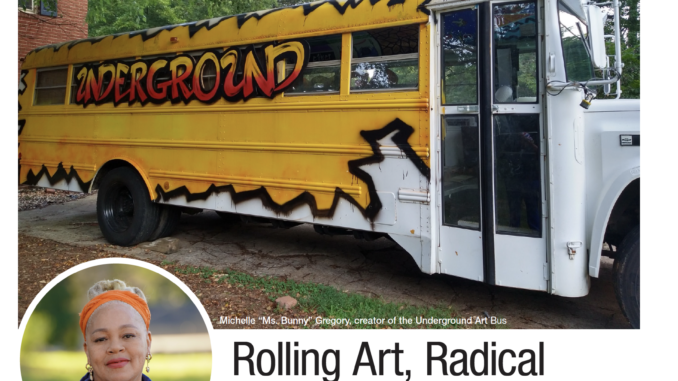
Gregory, the creator of the original collective, The Underground, which supported young Black artists, is the visionary behind the Underground Art Bus — a converted yellow school bus that brings free visual and performing arts experiences directly to children across Charlotte and its surrounding cities, particularly within the city’s designated Corridors of Opportunity. For Gregory, this journey is both personal and purposeful. It’s guided by a commitment to ensure today’s children, like those in the West Charlotte neighborhood she grew up in, have access to creative outlets without barriers.
A mother of eight, Gregory said her creative direction was shaped not only through traditional art, but through expressive outlets such as costume design and fashion. Reflecting on motherhood, she remembers sewing six prom dresses for her household, her hands turning fabric into moments her children would carry forever.
Much of her family’s clothing was designed and stitched by her own hand growing up — not out of necessity alone, but as an act of true expression. That creativity, first taught by her own mother, now lives on through her daughter, who is learning the craft as a seamstress, continuing a lineage where creativity is inherited, practiced and passed down.
The Underground Art Bus was born during the covid-19 pandemic, a time marked by uncertainty and shifting norms. As creative spaces closed and opportunities for children dwindled, Gregory was intentional about ensuring art remained a source of light through hard times. Mobility became the only solution to access. A bus allowed her to meet communities where they were — outdoors, safely and without the limitations of traditional brick-and-mortar spaces.
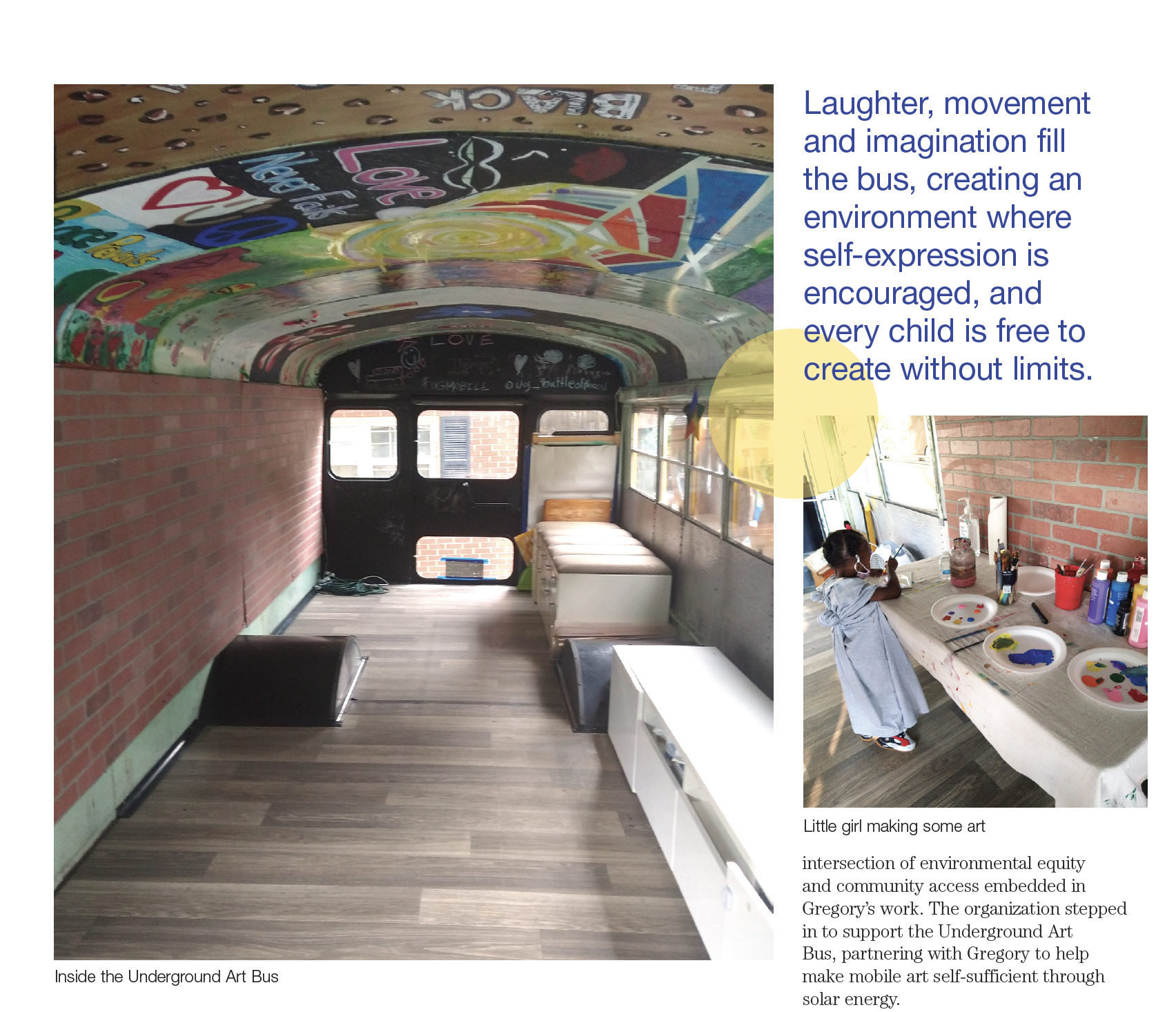
Admission is free, and once inside the bus, children are invited to explore creativity with their hands and voices. Magnets snap onto metal walls, paint brushes glide across paper, drums echo with rhythm, and spontaneous performances turn the small space into a stage.
Laughter, movement, and imagination fill the bus, creating an environment where self-expression is encouraged, and every child is free to create without limits. For many children, the Underground Art Bus is their first opportunity to experiment with art in a space created for them — without grades, pressure or expectations.
Still, sustaining the project has come with challenges. “I would drive to a destination and still face the possibility of not being able to use a power source,” Gregory said. Limited access to electricity has often restricted where the bus can park and how programming unfolds, prompting Gregory to rethink and reform her initiatives with access at the center.
“I consider myself an environmentalist,” she added. “Partnership with Sol Nation aligns with my vision.” Sol Nation is a nonprofit focused on climate, justice and sustainability. It recognized the intersection of environmental equity and community access embedded in Gregory’s work. The organization stepped in to support the Underground Art Bus, partnering with Gregory to help make mobile art self-sufficient through solar energy.
Together, they launched a fundraiser for solar panel installation. Any additional funds raised will go toward new program additions. Gregory plans to introduce as early as February 2026, as well as gas costs — helping the Underground Art Bus continue to reach children across the region up to four times a week.
With community support, Gregory said she hopes the bus will continue rolling through neighborhoods like Beatties Ford Road — carrying not just paintbrushes and supplies, but affirmation, access and sustainability. Ultimately, Gregory said she wants her legacy to leave behind a clear and enduring truth: art should embody community for the underserved and the overlooked — not as a privilege, but as a community promise.