
By Sasha Manley
As growth trends continue to show, Charlotte is one of the fastest-growing cities in the United States. According to the Charlotte Regional Business Alliance, “The city is ranked the 17th largest city in the U.S. with more than 930,000 residents, while Mecklenburg County’s population is over 1,190,000. Charlotte’s population is growing, with an estimated 991,373 residents expected by 2030.” While the growth is good. What does this mean for affordable housing?
As the city continues to grow, current and future residents will need various types of new homes. This is where Urban Trends Real Estate Firm comes in. According to the company’s website: “Urban Trends Real Estate, Inc. is a privately-owned Charlotte-based company that focuses on solving the inequity of quality, affordable housing by acquiring and developing real estate that will stabilize and transform neighborhoods.”
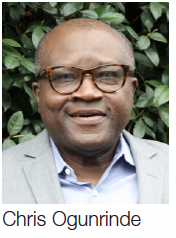
Chief Executive Officer Chris Ogunrinde, an architect with more than 30 years of experience, discussed his company and team’s dedication: “The simplest way to describe our approach is that we are laser-focused on urban communities, whether it be a few single-family homes, duplexes or accessory dwelling units, to developments of multi-family units,” he said.
Getting started
Ogunrinde explained how the company, which was established in 2010, shortly after the economic recession, was born. “The original idea was to set up a company that would [use our] planning, architecture and development background to bring about meaningful and sustainable change to the communities we serve,” he said.
Defining affordable housing
It’s important to understand the differences between the housing sectors Urban Trends offers: affordable (subsidized), attainable (unsubsidized) and conventional (market rate) housing.
Ogunrinde provides the following description of these housing sectors: Subsidized housing includes communities with government subsidies such as tax credits, project-based vouchers or government grants — servicing households at 30-80% of area median income. “Sometimes we self-impose affordability standards to meet the needs of the communities we serve which have 80-120% of Area Median Income,” he said. Market-rate housing serves households above 120% of area median income, he explained.
Developments that make a difference
Urban Trendss portfolio includes completed projects and projects underway. In 2023, the firm accomplished Eastway Crossing in collaboration with Harmony Housing — a national affordable housing developer. The 132-unit senior community serves previously homeless veteran residents aged 55 and older through Veterans Affairs Supportive Housing.
Some of the more recent developments include:
•
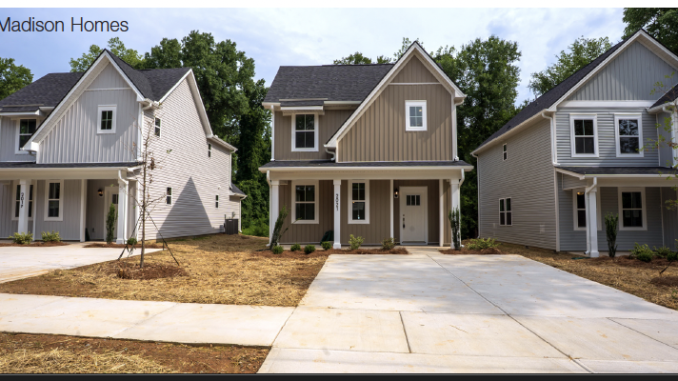
Bishop Madison Homes — new construction homes with energy efficiency
•
Lake View Community — Lakeview Apartments, 3311 Rozzelles Ferry Road. 2-bedroom and 2-bath units
Ogunrinde also shares details about another partnership due in 2027: “Urban Trends, in collaboration with the Southeast Raleigh Promise as co-developer, is advancing a 25-unit missing-middle development.” He said this project is taking his team beyond the Charlotte limits in an effort to keep the affordable housing movement going.
“This project is undertaken in partnership with the City of Raleigh and is funded through the 2020 Affordable Housing Bond program,” he said. The development will include single-family homes, duplexes and accessory dwelling units. It will be built on city-owned scattered lots provided under a ground lease with the City of Raleigh and construction is anticipated to be completed in Q4 2027, he added.
Building ahead
Urban Trends values the community’s voice, Ogunrinde said. Through the firm’s social entrepreneurship, forward-thinking design and profitability, each area is an important piece of the puzzle, he added.
“This is a very important aspect of our practice, in that we are constantly making decisions with the community in mind. Our team believes that good design positively affects emotions, and it doesn’t necessarily have to cost more money to create quality places for people to live,” said Ogunrinde.
Urban Trends takes a people-centered approach to housing, he added. He further explained why communication is key: “We take it a step further by making sure we stay engaged with the communities we serve through supportive services that are available through our nonprofit partners at UT Collective.”
Ogunrinde added: “None of the good work we do will be possible without the amazing team of individuals that I work with at Urban Trends.
P
By Sasha Manley
As growth trends continue to show, Charlotte is one of the fastest-growing cities in the United States. According to the Charlotte Regional Business Alliance, “The city is ranked the 17th largest city in the U.S. with more than 930,000 residents, while Mecklenburg County’s population is over 1,190,000. Charlotte’s population is growing, with an estimated 991,373 residents expected by 2030.”
While the growth is good. What does this mean for affordable housing?
As the city continues to grow, current and future residents will need various types of new homes. This is where Urban Trends Real Estate Firm comes in.
According to the company’s website: “Urban Trends Real Estate, Inc. is a privately-owned Charlotte-based company that focuses on solving the inequity of quality, affordable housing by acquiring and developing real estate that will stabilize and transform neighborhoods.”
Chief Executive Officer Chris Ogunrinde, an architect with more than 30 years of experience, discussed his company and team’s dedication: “The simplest way to describe our approach is that we are laser-focused on urban communities, whether it be a few single-family homes, duplexes or accessory dwelling units, to developments of multi-family units,” he said.
Getting started
Ogunrinde explained how the company, which was established in 2010, shortly after the economic recession, was born. “The original idea was to set up a company that would [use our] planning, architecture and development background to bring about meaningful and sustainable change to the communities we serve,” he said.
Defining affordable
housing
It’s important to understand the differences between the housing sectors Urban Trends offers: affordable (subsidized), attainable (unsubsidized) and conventional (market rate) housing.
Ogunrinde provides the following description of these housing sectors: Subsidized housing includes communities with government subsidies such as tax credits, project-based vouchers or government grants — servicing households at 30-80% of area median income.
“Sometimes we self-impose affordability standards to meet the needs of the communities we serve which have 80-120% of Area Median Income,” he said. Market-rate housing serves households above 120% of area median income, he explained.
Developments that
make a difference
Urban Trendss portfolio includes completed projects and projects underway. In 2023, the firm accomplished Eastway Crossing in collaboration with Harmony Housing — a national affordable housing developer. The 132-unit senior community serves previously homeless veteran residents aged 55 and older through Veterans Affairs Supportive Housing.
Some of the more recent developments include:
•
Bishop Madison Homes — new construction homes with energy efficiency
•
Lake View Community — Lakeview Apartments, 3311 Rozzelles Ferry Road. 2-bedroom and 2-bath units
Ogunrinde also shares details about another partnership due in 2027: “Urban Trends, in collaboration with the Southeast Raleigh Promise as co-developer, is advancing a 25-unit missing-middle development.” He said this project is taking his team beyond the Charlotte limits in an effort to keep the affordable housing movement going.
“This project is undertaken in partnership with the City of Raleigh and is funded through the 2020 Affordable Housing Bond program,” he said. The development will include single-family homes, duplexes and accessory dwelling units. It will be built on city-owned scattered lots provided under a ground lease with the City of Raleigh and construction is anticipated to be completed in Q4 2027, he added.
Building ahead
Urban Trends values the community’s voice, Ogunrinde said. Through the firm’s social entrepreneurship, forward-thinking design and profitability, each area is an important piece of the puzzle, he added.
“This is a very important aspect of our practice, in that we are constantly making decisions with the community in mind. Our team believes that good design positively affects emotions, and it doesn’t necessarily have to cost more money to create quality places for people to live,” said Ogunrinde.
Urban Trends takes a people-centered approach to housing, he added. He further explained why communication is key: “We take it a step further by making sure we stay engaged with the communities we serve through supportive services that are available through our nonprofit partners at UT Collective.”
Ogunrinde added: “None of the good work we do will be possible without the amazing team of individuals that I work with at Urban Trends.
P