By Charles K Harris
Growing up is hard to do. But some young people face more formidable challenges than others. Problems on the home front like abuse, neglect or parental substance abuse can turn an already chaotic time of life into a full-blown crisis.
Fortunately, for Charlotte-Mecklenburg youth, there is a port in the storm.
Finding a Safe Place
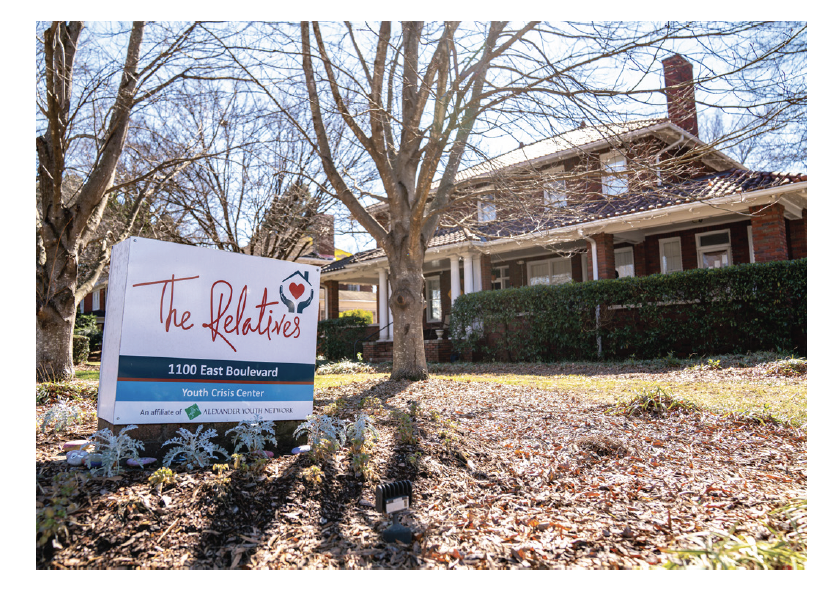
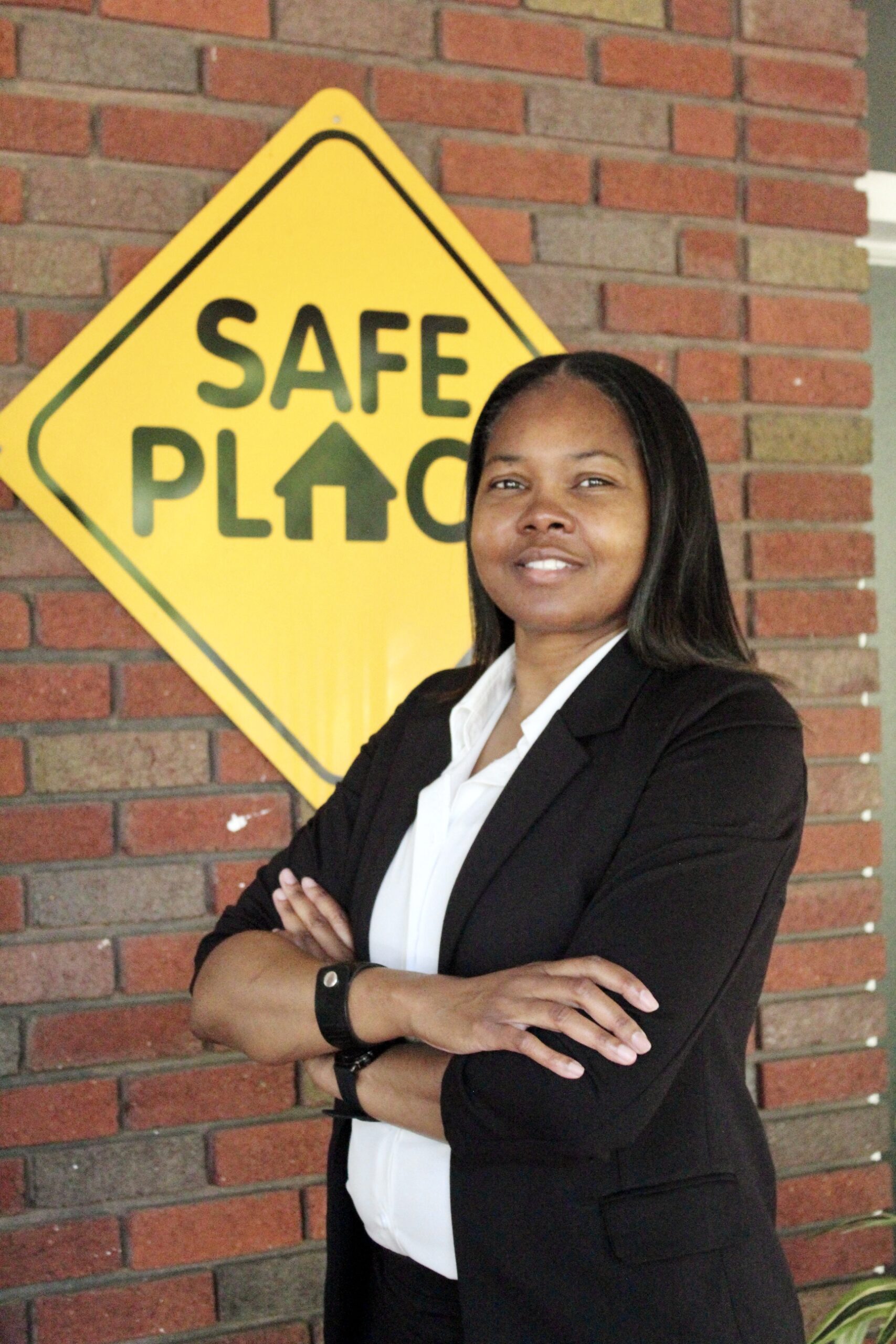
“’Safe Places’ are vital because they provide youth in crisis immediate access to safety and a trusted adult when they may have nowhere else to turn,” explained Tamara Smith, Program Manager for The Relatives Youth Crisis Center on East Boulevard in Charlotte.
These designated locations called “Safe Places” are marked by distinct yellow and black diamond-shaped signs and are designated, easily accessible locations (like fire stations, libraries and businesses) where youth in crisis can go to get immediate help.
Young people in the county (ages 7-24) can enter a “Safe Place” and let a person affiliated with the business know they need help. The staff will immediately contact The Relatives and trained personnel will arrive to transport the youth directly to a secure facility.
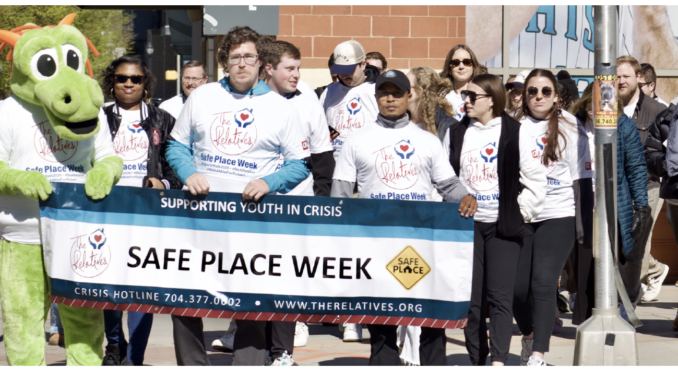
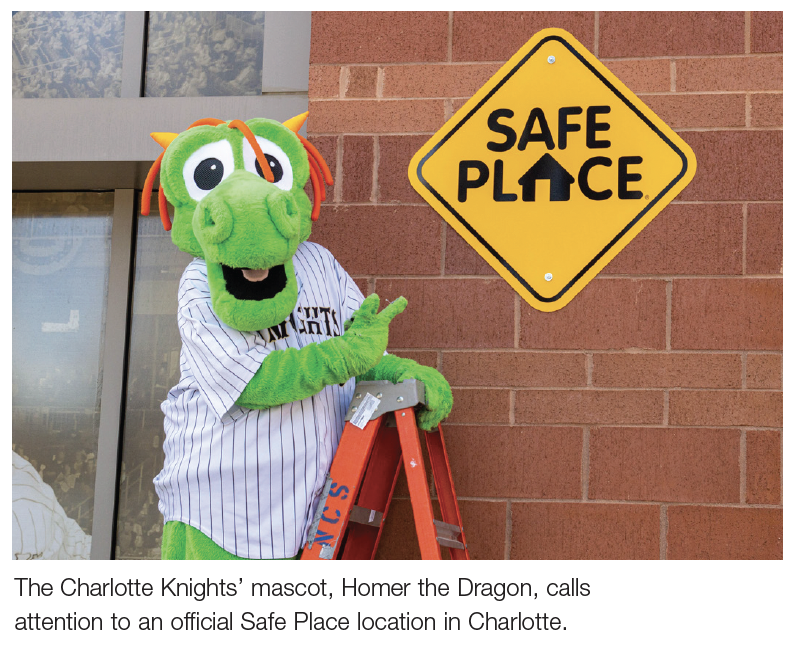
Supported by National Safe Place Network, The Relatives now provides 680 designated Safe Place locations in the region. Some partners have multiple Safe Place locations, such as the Charlotte Fire Department, YMCA, QuickTrip, Charlotte-Mecklenburg Libraries and the Charlotte Area Transit System. The Charlotte Knights is the first professional team to register their stadium as a designated Safe Place site.
Any young person 7 to 24 years old seeking help can call or text The Relatives’ 24-hour crisis hotline, 704-377-0602, or visit the Crisis Center or any other “Safe Place” location. Once their immediate needs are assessed, trained staff work to identify the best support for each youth’s specific situation. Continuing resources include emergency shelter, counseling and family support.
Who are The Relatives?
The Relatives was founded in 1974 by members of the Dilworth United Methodist Church in response to a rising number of homeless adolescents in the area. Outgrowing the church’s basement, The Relatives relocated to East Boulevard where they have served some 20,000-area youth over 50 years.
Since partnering with the National Safe Place Network (NSPN) in 1988, The Relatives has expanded services and reach.
The NSPN works to ensure that “Safe Places” are accessible to youth no matter where they are. For over 40 years they have established official “Safe Places” across the country.
“Through partnering with (NSPN), The Relatives exponentially expanded the safety net for youth in crisis,” Smith said. “[We’ve created] a local network of businesses, churches, schools, transportation services and other youth-friendly locations that were willing to post the “Safe Place” signs and identify as a place for youth to obtain immediate help,” she added.
“We provide immediate access to safety and support for youth (ages 7-24) in crisis, including those who have run away, are experiencing homelessness, family conflict, abuse, neglect or other situations where they do not feel safe,” Smith said.
Smith said she wants the public to understand that these are not just brick and mortar safe places, they also offer shelter from criticism or condemnation. “[Young people] are met with compassion, not judgment,” Smith said.
But services don’t stop there.
Through their On Ramp Resource Center at 2219 Freedom Drive, The Relatives also offers youth ages 16-24, GED tutoring, resume building and life skill workshops.
Support for The Relatives
The organization’s annual budget of about $6 million dollars comes from three funding sources; the government, charitable foundations and private donors.
With diverse sourcing, The Relatives can avoid overreliance on one entity, said Smith. “We’re able to maintain financial stability and continue serving even when economic conditions or funding priorities change.”
But that doesn’t mean The Relatives organization doesn’t need support. “There are multiple ways to support our mission,” Smith said. “We welcome volunteers and donations at both our Youth Crisis Center and our On Ramp Resource Center.”
She also urges residents to become familiar with the Safe Place program, its purpose and locations so a greater number of youth seeking help know they have options.
“We need help raising awareness and increasing engagement,” Smith said. “[The goal is] creating a network of partners committed to protecting young people and connecting them to the support they need.”
Individuals, organizations and businesses can also partner with The Relatives to become a designated location or ambassador.
Creating a family-like environment
The importance of organizations like The Relatives is readily apparent when hearing any one of the many true stories about the youth that have passed through their doors.
Smith recounts a story about a young man who turned to marijuana to navigate the grief left in the wake of his mother’s death. “He had no family support and felt lost. But during his stay he opened up to staff, participated in activities, he began to heal.”
Upon his departure, the young man’s expressions made what Smith calls an “emotional” experience for everyone, even more touching.
“He told us he didn’t want to go,” she said. “Because for the first time in a long time, he felt like he had found a family.” Providing that “family” is the very essence of the original founders’ mission.
According to The Relatives’ website, instead of telling friends and classmates they had run away or were homeless, the organization’s earliest young visitors would simply say they were “staying with relatives.”